 HREN


vibe-bill, a Claude Code skill that estimates an AI-built app’s monthly bill at 100 to 100,000 users and points out the code that makes it biggervibe-bill, AI로 만든 앱의 월 비용을 사용자 100명부터 100,000명까지 어림하고 비용을 키우는 코드를 짚는 Claude Code 스킬
vibe-bill is a Claude Code skill that, with one /vibe-bill command, estimates an AI-built app’s monthly bill at 100, 1,000, 10,000 and 100,000 users and points out code that inflates it; it needs Claude Code and Node 22 or newer, and the app’s code is read by Claude like any other Claude Code request. The result is an estimate that does not know real traffic, discounts or free credits, with AI prices taken from OpenRouter list prices without caching or batch discounts. The LICENSE file and the README name the MIT License, while THIRD_PARTY_NOTICES.md says the project’s own license is undecided.vibe-bill은 /vibe-bill 한 번으로 AI로 만든 앱의 월 비용을 사용자 100명·1,000명·10,000명·100,000명 기준으로 어림하고 비용을 키우는 코드를 짚는 Claude Code 스킬로, Claude Code와 Node 22 이상이 필요하고 앱 코드는 다른 Claude Code 요청처럼 Claude가 읽습니다. 결과는 실제 트래픽·할인·무료 크레딧을 모르는 어림값이고 AI 가격은 캐싱·배치 할인을 뺀 OpenRouter 목록 가격입니다. LICENSE 파일과 README는 MIT License라고 적었지만 THIRD_PARTY_NOTICES.md는 프로젝트 자체 라이선스가 아직 정해지지 않았다고 적고 있습니다.
- Checked확인일
vibe-bill is a Claude Code skill that, when /vibe-bill is typed in the project folder of an app built with AI, estimates the monthly bill at 100, 1,000, 10,000 and 100,000 users, points out code that makes the bill bigger than it needs to be, and produces a shareable receipt image plus a plain-language report with the bill for every user count. It needs Claude Code and Node 22 or newer and is added from the project folder with npx skills add globalmpc/vibe-bill -a claude-code, or, without npx, by copying the repository’s skills/vibe-bill folder into the project’s .claude/skills/, in which case Node 20 is enough to run the skill itself. The app’s code is read by Claude the same as any other Claude Code request, the internet is used only for prices, namely the public OpenRouter model price list and a web search for services it does not already know, and the README says it never reads secret values, looking only at the names of environment variables and never opening .env files, and never changes code, writing only a .vibe-bill/ folder in the project.vibe-bill은 AI로 만든 앱의 프로젝트 폴더에서 /vibe-bill을 입력하면 사용자 100명, 1,000명, 10,000명, 100,000명일 때의 월 비용을 어림하고, 비용을 필요 이상으로 키우는 코드를 짚고, 공유용 영수증 그림과 사용자 수마다 비용을 적은 쉬운 말 보고서를 만드는 Claude Code 스킬입니다. Claude Code와 Node 22 이상이 있어야 하고, 프로젝트 폴더에서 npx skills add globalmpc/vibe-bill -a claude-code로 깔거나 npx가 없으면 저장소의 skills/vibe-bill 폴더를 프로젝트의 .claude/skills/로 복사하며, 이때 스킬 자체는 Node 20으로도 돕니다. 앱 코드는 다른 Claude Code 요청처럼 Claude가 읽고, 인터넷은 가격에만 쓰며 그 대상은 공개된 OpenRouter 모델 가격표와 모르는 서비스의 웹 검색이고, README는 비밀 값은 읽지 않고 환경 변수 이름만 보며 .env 파일을 열지 않고 코드를 바꾸지 않은 채 프로젝트에 .vibe-bill/ 폴더 하나만 쓴다고 적었습니다.
The result is an estimate, not an invoice: real traffic, discounts and free credits are unknown to it, AI prices are OpenRouter list prices without caching or batch discounts, so a real bill may be lower, and CDN traffic, extra team seats, Stripe international and currency fees and paid add-ons are not counted. The LICENSE file and the README name the MIT License, but the last line of THIRD_PARTY_NOTICES.md in the same repository says the project’s own license is undecided, so the two disagree; when checked on November 18, the repository had a single commit from November 12 and no releases.결과는 청구서가 아니라 어림값이라 실제 트래픽, 할인, 무료 크레딧을 모르고, AI 가격은 캐싱이나 배치 할인을 뺀 OpenRouter 목록 가격이어서 실제 청구액은 더 낮을 수 있으며, CDN 트래픽, 팀 좌석 추가, Stripe 해외·환전 수수료, 유료 부가 기능은 세지 않습니다. 라이선스는 LICENSE 파일과 README가 MIT License로 적었지만 같은 저장소의 THIRD_PARTY_NOTICES.md 끝 줄은 프로젝트 자체 라이선스가 아직 정해지지 않았다(undecided)고 적어 두 문서가 어긋나고, 11월 18일 확인 때 저장소에는 11월 12일 커밋 하나만 있고 릴리스는 없었습니다.
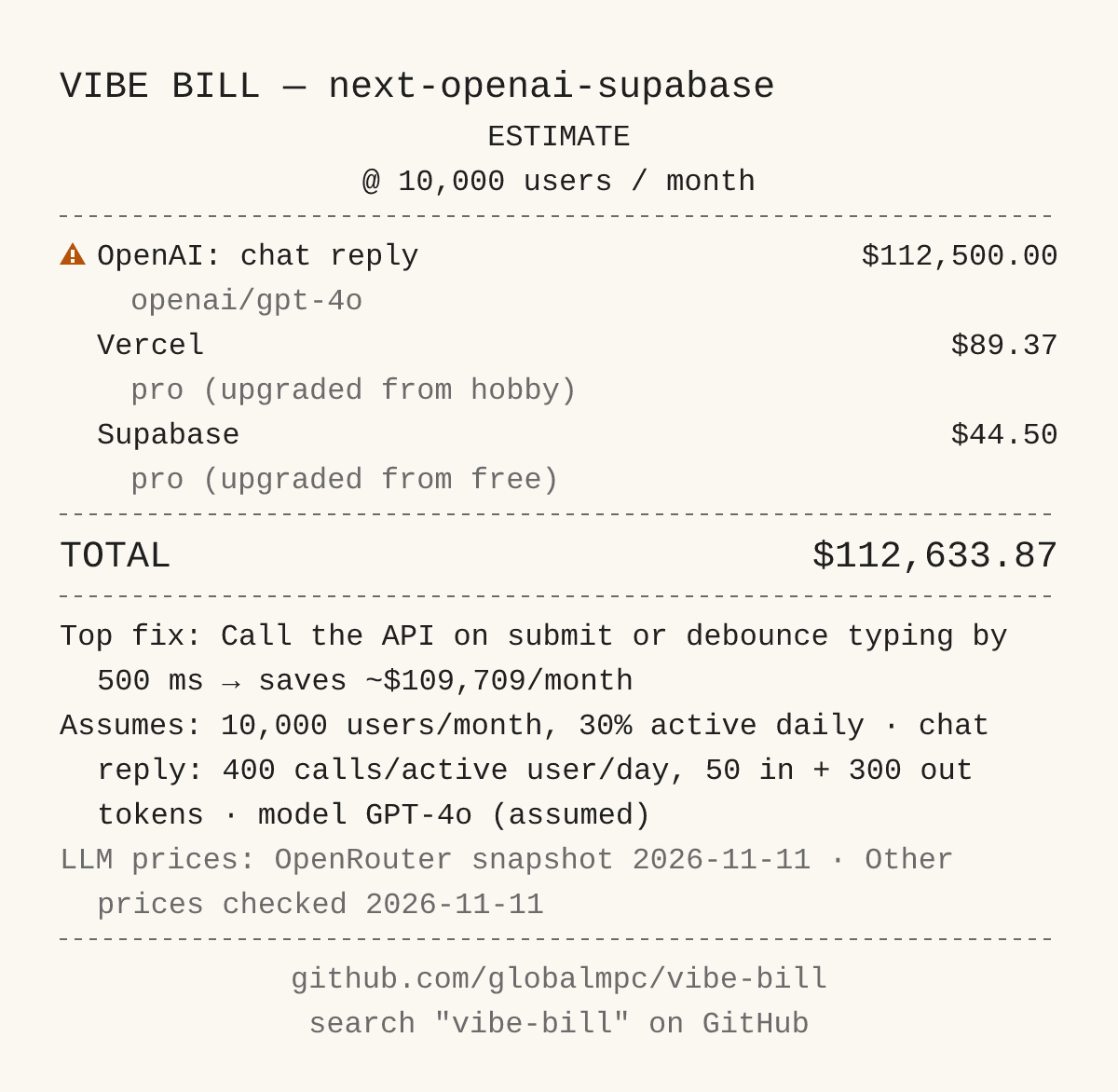
With the app folder open in Claude Code, /vibe-bill asks up to 4 quick questions, such as which AI model production uses and which plan is paid for, and anything skipped is assumed and marked as assumed. The output is a receipt at .vibe-bill/out/receipt.png and a report at .vibe-bill/out/report.md that explains the numbers, and /vibe-bill --no-questions runs with no questions at all.Claude Code에서 앱 폴더를 열고 /vibe-bill을 입력하면 프로덕션에서 쓰는 AI 모델, 내는 요금제 같은 질문을 4개까지 하고, 건너뛴 답은 가정으로 채워 가정이라고 표시합니다. 결과는 .vibe-bill/out/receipt.png 영수증과 숫자를 풀어 쓴 .vibe-bill/out/report.md이고, /vibe-bill --no-questions는 질문 없이 돕니다.
It looks at AI calls to OpenAI, Anthropic, Google and OpenRouter (which model, how often each call runs and about how much text goes in and out), services with a free tier such as Supabase, Vercel, Clerk, Resend and Stripe (when the free plan is outgrown, when an upgrade is needed and the fees), and other services, whose price is looked up on the web once and shown as (unverified). Its list of things that quietly burn money has nine entries, among them an AI call on every keystroke or re-render, the whole chat history sent again with every message, an expensive top model doing a simple job, repeated identical AI requests with no caching and a public AI endpoint with no rate limit. The AI never makes up a dollar amount: Claude only describes how the app uses things, and the code does the math.살피는 것은 OpenAI, Anthropic, Google, OpenRouter의 AI 호출(어떤 모델을 얼마나 자주 부르고 대략 얼마만큼의 글을 주고받는지), 무료 등급이 있는 Supabase, Vercel, Clerk, Resend, Stripe(언제 무료 요금제를 넘어 올려야 하는지와 수수료), 그 밖의 서비스(웹에서 한 번 찾은 가격을 (unverified)로 표시)입니다. 돈을 새게 하는 코드로는 키를 누를 때마다나 다시 그릴 때마다 부르는 AI, 메시지마다 다시 보내는 대화 기록 전체, 간단한 일에 쓰는 비싼 최상위 모델, 캐싱 없이 되풀이하는 같은 AI 요청, 속도 제한 없는 공개 AI 엔드포인트를 비롯한 아홉 가지를 꼽습니다. 금액은 AI가 지어내지 않고, Claude는 앱이 무엇을 쓰는지만 설명하며 계산은 코드가 합니다.
The receipt shows one user count, 10,000 by default, and never shows file names, secret names or secrets, while the report does mention file names from the code, which is why the README says to share the receipt rather than the report. By default a saved price list is used, so two runs give the same numbers; asking for fresh prices downloads the current OpenRouter list, prices for Supabase, Vercel, Clerk, Resend and Stripe change only when the skill is updated, and prices older than 30 days are marked “may be outdated”. A .vibe-bill/config.json file can list 1 to 6 user counts or replace any of the guesses.영수증은 사용자 수 하나(기본 10,000명)만 보이고 파일 이름, 비밀 이름, 비밀 값을 보이지 않지만 보고서에는 코드의 파일 이름이 들어가므로, README는 보고서가 아니라 영수증을 나누라고 적었습니다. 기본은 저장된 가격표라 두 번 돌려도 같은 숫자가 나오고, 새 가격을 달라고 하면 그때의 OpenRouter 목록을 내려받으며, Supabase, Vercel, Clerk, Resend, Stripe의 가격은 스킬이 바뀔 때만 바뀌고 30일이 지난 가격에는 "may be outdated"가 붙습니다. .vibe-bill/config.json에 사용자 수를 1개에서 6개까지 적거나 가정 값을 바꿀 수 있습니다.
Because services are found by known package names, variable names and code patterns, some can be missed, and when the code cannot tell how many messages a user sends, a typical number is assumed and the report says which values were guessed.알려진 패키지 이름, 변수 이름, 코드 꼴로 서비스를 찾으므로 놓치는 것이 있을 수 있고, 코드로 사용자당 메시지 수를 알 수 없으면 흔한 값을 가정해 어느 것이 가정인지 보고서에 적습니다.
Keep reading더 읽기
All articles전체 글SmoovPlaySmoovPlay
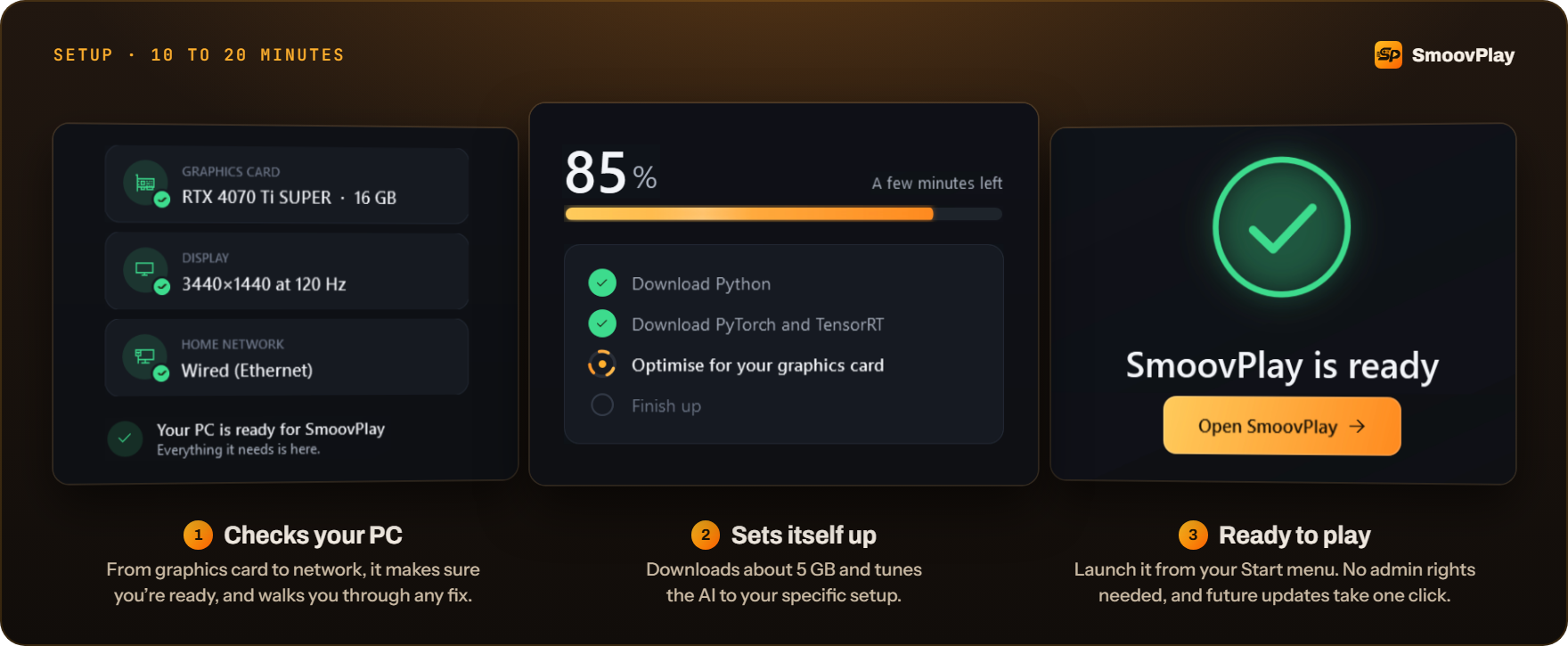
SmoovPlay, a free Windows program that receives a PS5’s Remote Play picture on a PC and has the graphics card draw AI frames so 30 fps console games play at 60, 90 or up to 120 fpsSmoovPlay, PS5 Remote Play 화면을 PC로 받아 그래픽카드가 AI 프레임을 그려 넣어 30fps 콘솔 게임을 60·90·최대 120fps로 보여 주는 Windows용 무료 프로그램
Checked확인일
Image: SmoovPlay README.그림: SmoovPlay README.
antialgorithmantialgorithm
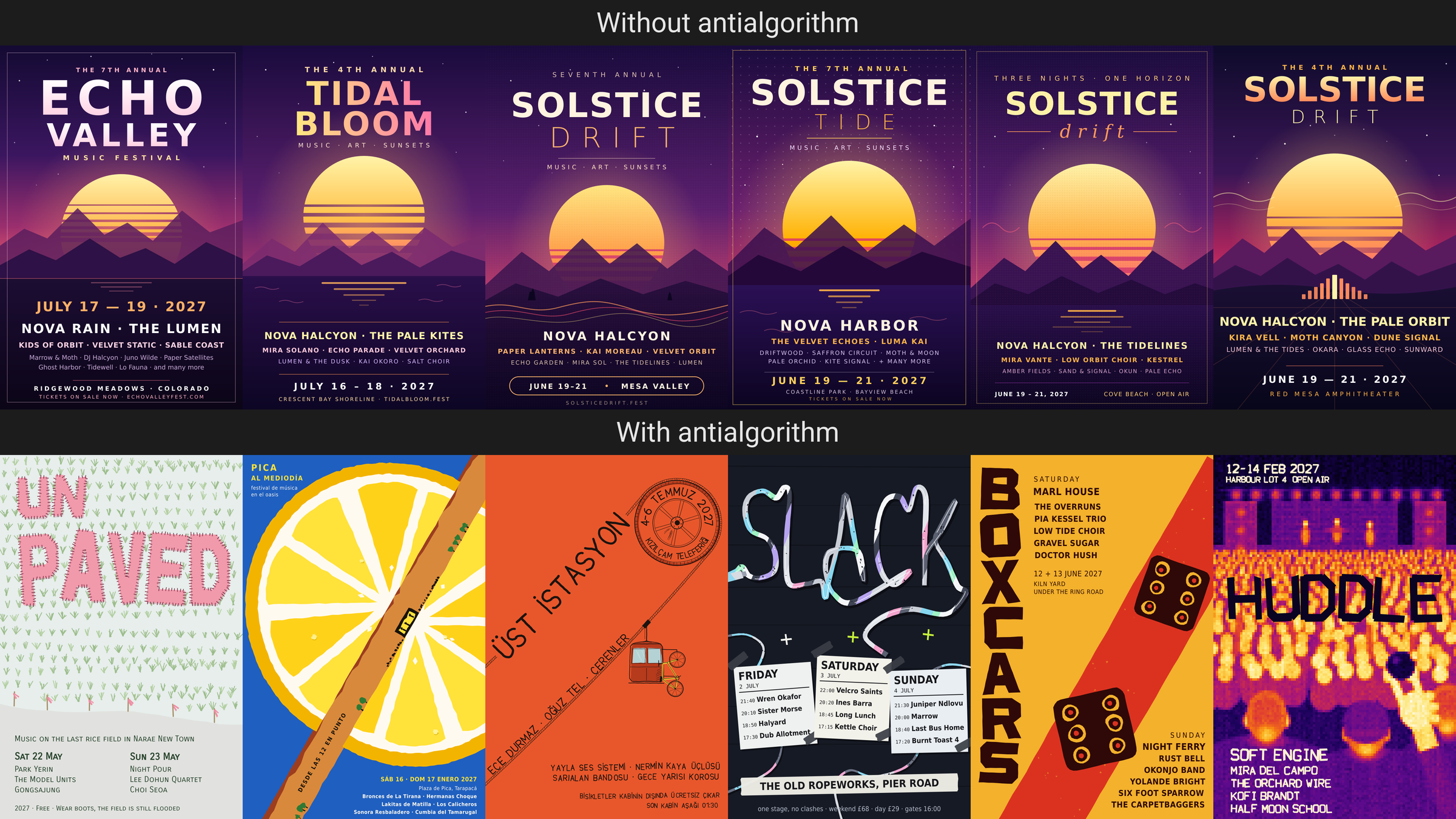
antialgorithm, an MIT-licensed Claude Code skill that makes the model name its first, most average pick in creative work and move away from it for a reason taken from the projectantialgorithm, 창작 일에서 모델이 가장 평범한 첫 안을 먼저 짚고 프로젝트에서 가져온 까닭으로 그 안에서 벗어나게 하는 MIT License Claude Code 스킬
Checked확인일
Image: antialgorithm README.그림: antialgorithm README.
rust-anythingrust-anything
rust-anything, an MIT-licensed command-line tool that moves a Node.js, Python, C, Go, Ruby or Java app to Rust one piece at a time and checks each piece against recordings of the originalrust-anything, Node.js·Python·C·Go·Ruby·Java 앱을 한 조각씩 Rust로 옮기며 조각마다 원래 코드의 기록과 맞춰 보는 MIT License 명령줄 도구
Checked확인일
Image: rust-anything README.그림: rust-anything README.